Every job has been the same bet in a new place. MIT at sixteen. A PhD in AI. Then ten years building AI at Google. I founded Applied AI at Google Cloud, closed billion dollar deals, and sat with more than 300 companies. As a Distinguished Engineer in the CTO office, I watched where the value went.
Watching wasn't enough. I wanted to see it in data nobody could argue with.
About
So I built a scanner. It reads what 3,000 public companies say and do about AI, every day, from earnings calls and SEC filings, checked against independent sources. In seven months it verified almost 10,000 real deployments. AI went from curiosity to commodity while most people were still debating it.
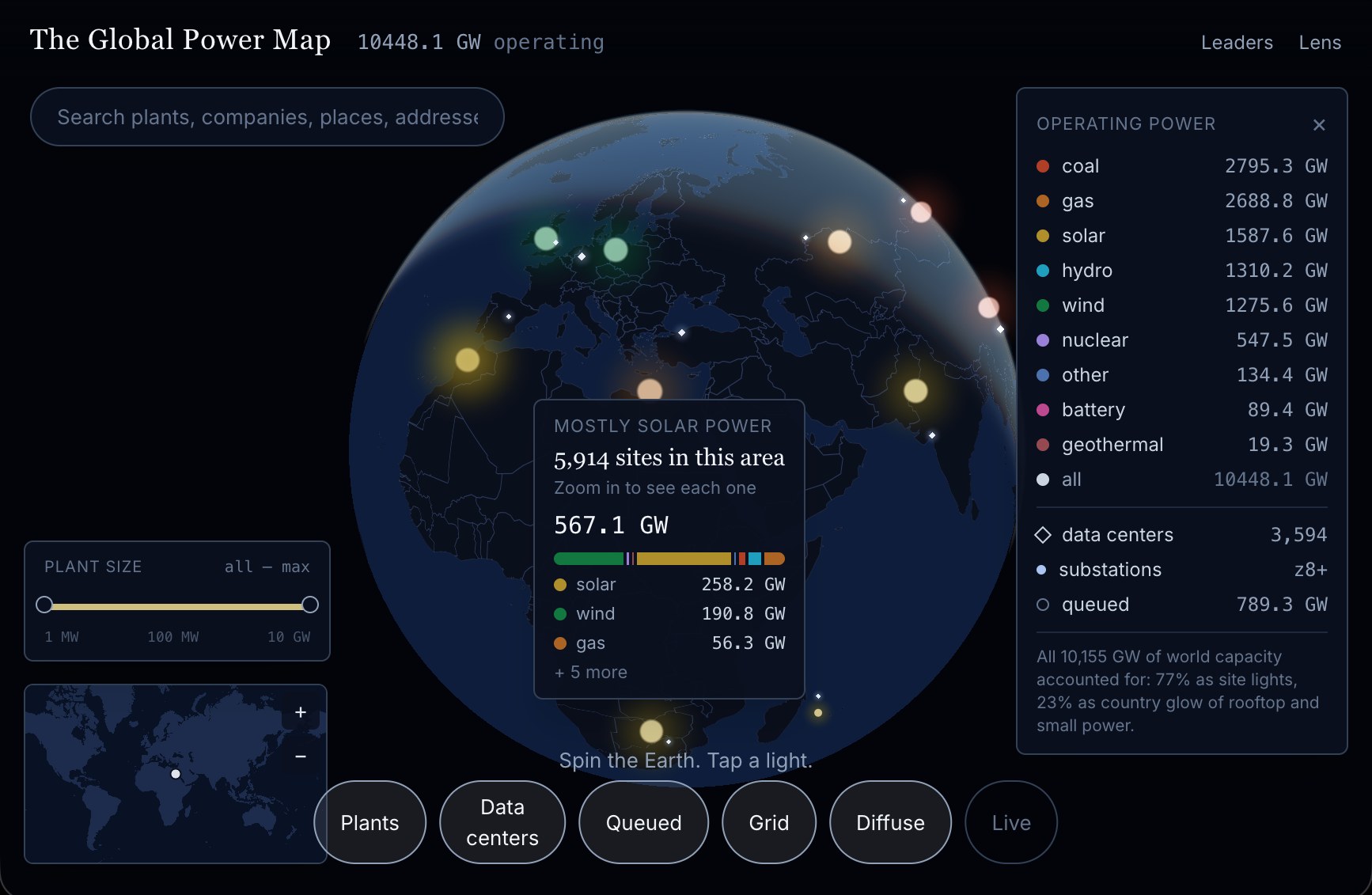
Now it watches the physical world too. Every day it maps the global power grid, the water, the live contracts, and the data centers: every published power deal, the ISOs, the power lines, the battery farms, the solar farms, the plants. Ten thousand gigawatts, tied to the companies behind them.
That data is an edge. It shows where value is moving before the market agrees, and it turns the art of the possible into something you can trade on. Applying AI for market returns is how I fund everything else on this page.
Open the Scanner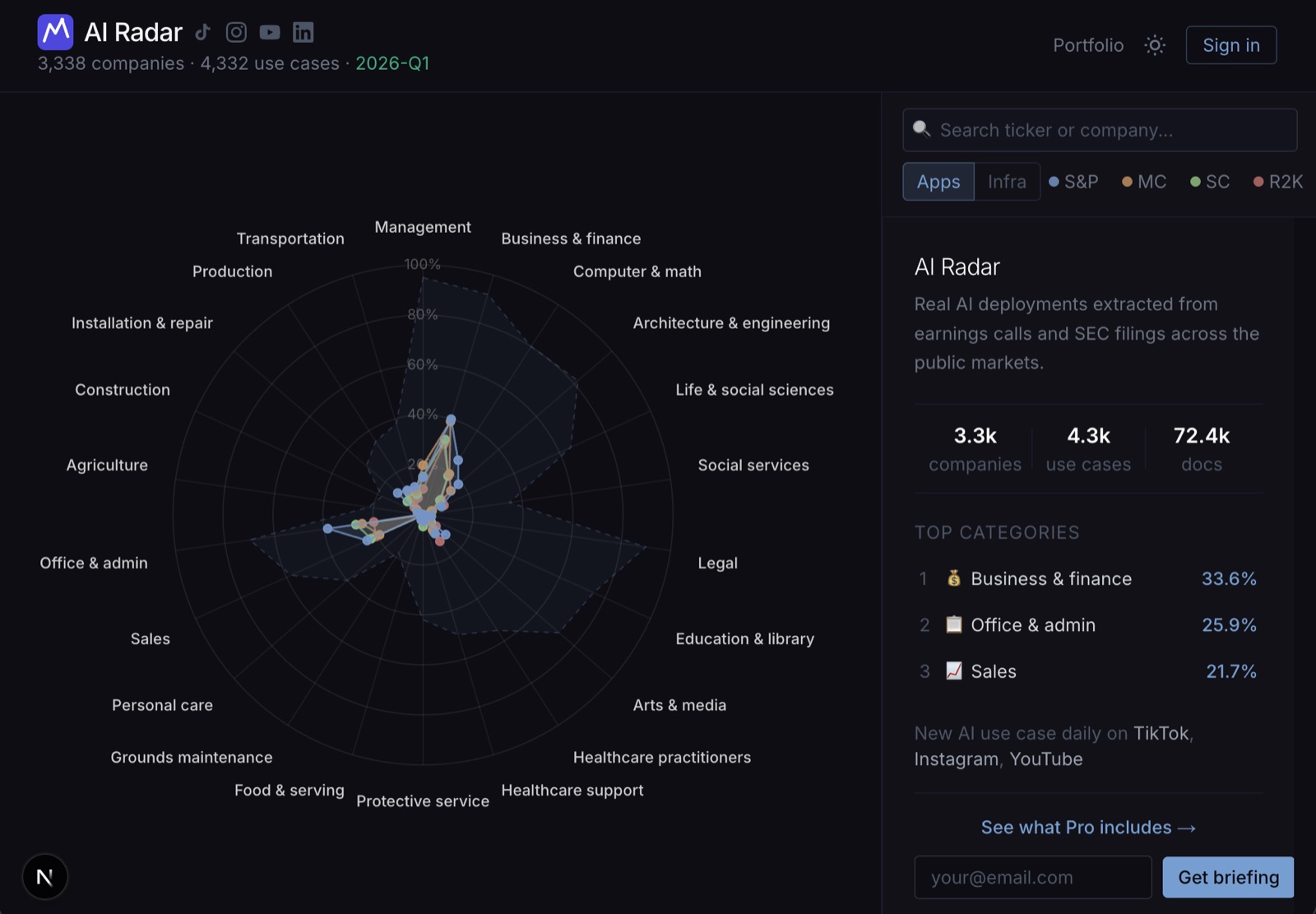
The easy ground filled in fast. The value moved to the problems you can't fake.
Then the data pointed somewhere. Plain software is the easy part now. The value is moving to physical AI. It is moving to fields that are heavily regulated and starved of data. It is moving to the stack that turns watts into tokens.
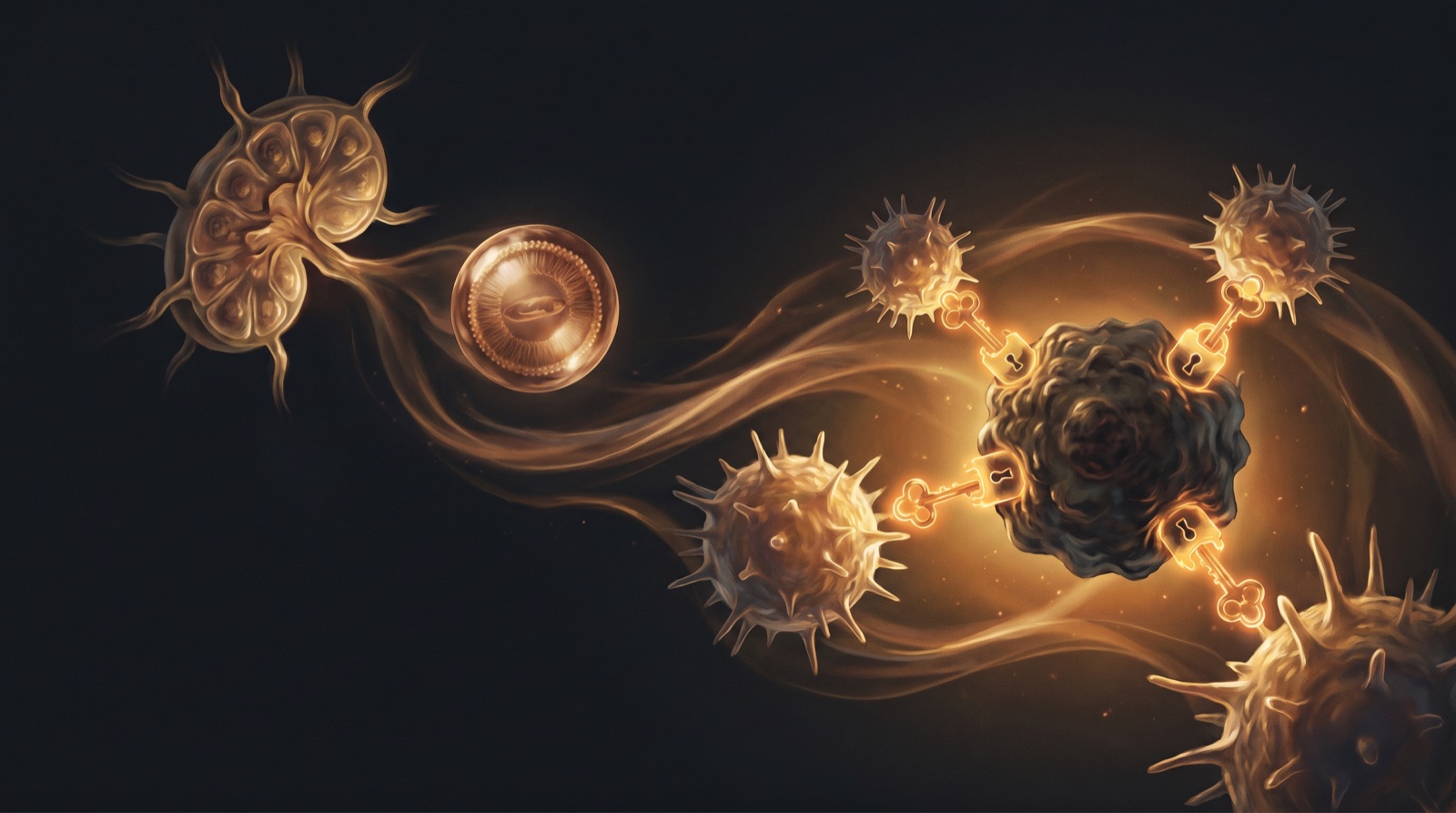
That insight points straight at cancer. So I picked it. Cancer is going digital. Programmable mRNA and CAR-T immunotherapies are code for the body, and designing them needs a model that watches a whole body over time. Longitudinal. Multimodal. Very large. I went looking for where that model would be born. The answer was video. So I jumped in with both feet.
I advise the Lustgarten Foundation and Stanford Medicine. I want to make your body clear to you. Then I'll track AI for cancer the way I tracked AI adoption, one verified advance at a time, and let the data show the way again.
Here is that thought again. Pixels over time. Nucleotides over time. Same trick. Intelligence is information learning to predict and generate itself over time. Teach it on video and you get worlds. Teach it on molecules and you get biology. Teach it to act and you get robots. That is why video and cancer are one problem.
I spent six years on that bet. People laughed. They've stopped. The full argument is the Approximation Era: compute replacing calculus, one field after another becoming computable through observation rather than derivation, from the math that brought John Glenn home to the treatments for cancer.
Read the essay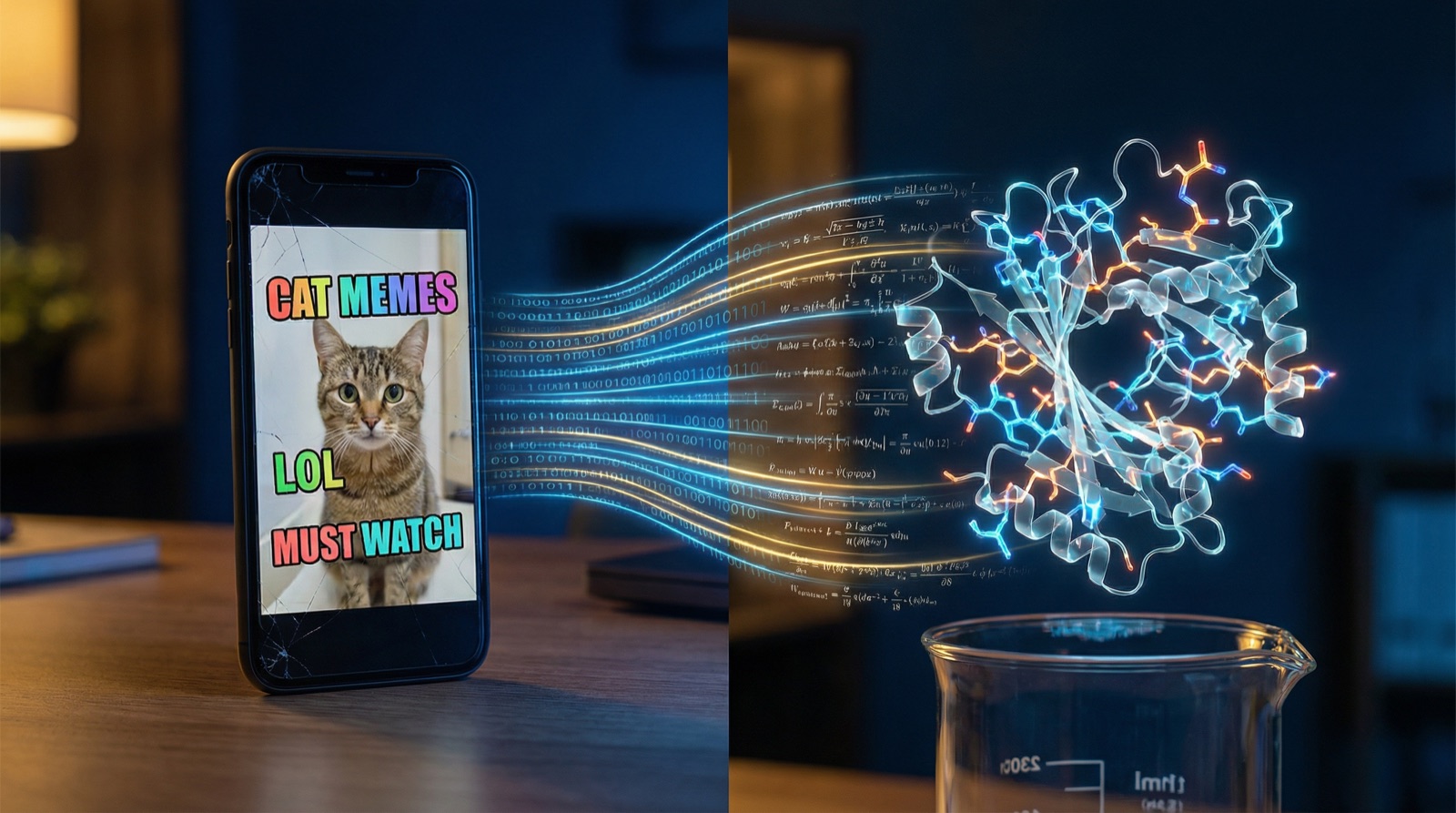
Are you choosing what to build?
Let's talk. I show leadership teams what AI can do for them right now. Then I open a laptop, and we build one of those things before the day ends. I take board and advisory seats, keynote on the Approximation Era, and still write the code. Reach me at scott@scott.ai, or follow the journey below. One email when it matters.