On February 20, 1962, John Glenn sat strapped inside a capsule the size of a phone booth, on top of an Atlas rocket like one he had watched explode three years earlier. Reentry was a corridor a few degrees wide. Too shallow meant skipping off the atmosphere into space. Too steep meant burning. NASA's new IBM 7090 computer had calculated his trajectory. He was in that seat only because of a demand he had made during the preflight checklist.
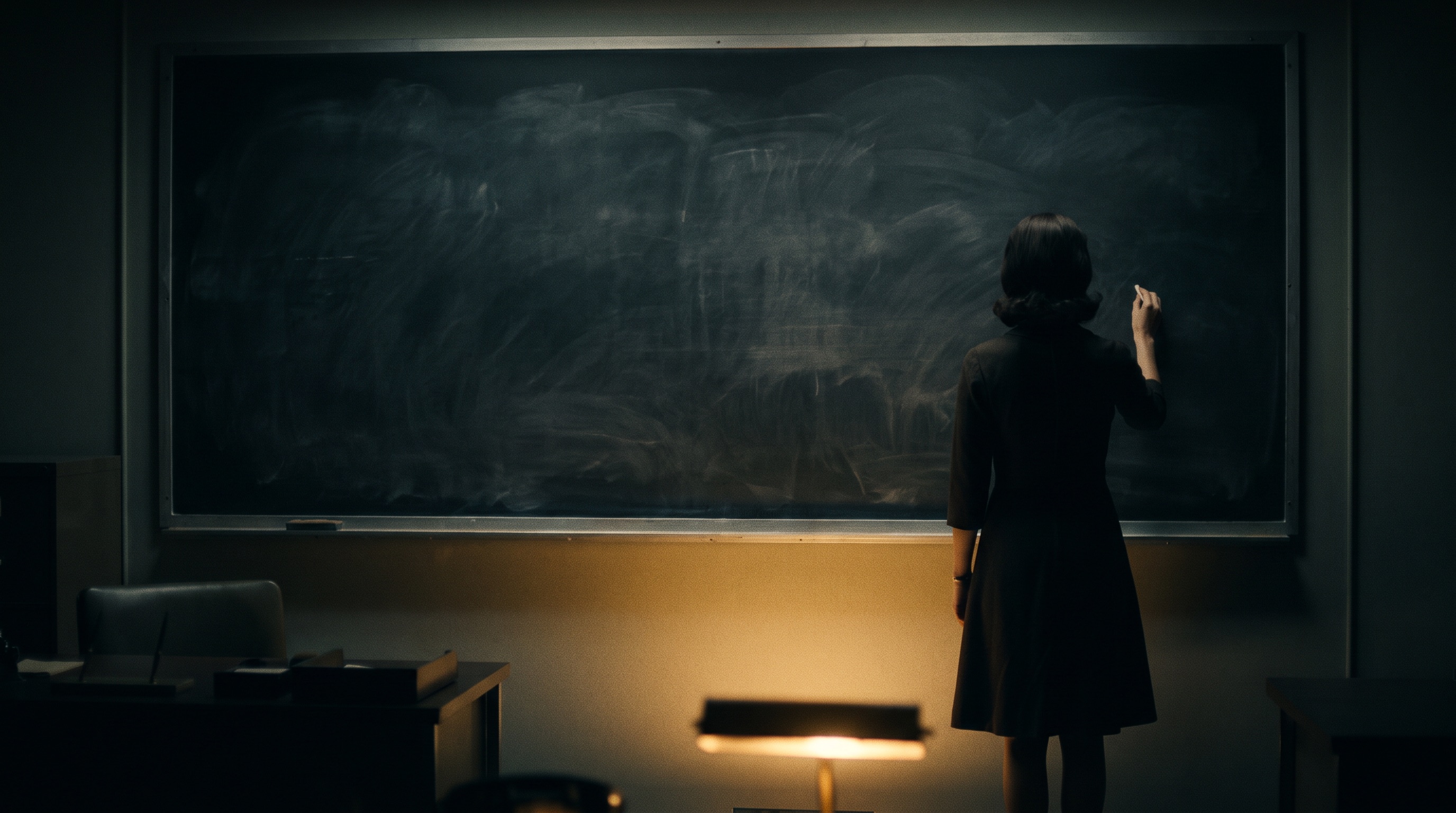
He would not fly on the machine's word alone. "Get the girl to check the numbers." Her name was Katherine Johnson. Her job title was Computer. The machine had already taken her title. What did she still have, that a man would bet his life on?
The Unsolvable
The reentry equations had no exact solution. Most of nature's equations do not. The universe gives us its rules, not its answers. So Katherine stepped them. Take a tiny step. Ask the rule where things are heading. Step again. Every step is slightly wrong, yet the full path brought Glenn home. She fought to put her name on that report, where women rarely got credit. Remember the name.
Reading History Backward
History is a trail walked in fog. Writing in 2026, we stand at the summit and see the whole trail. From here, 250 years of mathematics collapse into one move, taken six times.

In 1687, Newton and Leibniz wrote nature's laws as differential equations. Almost none can be solved.
In 1768, Euler stopped solving and started stepping. His is the equation Katherine used.
In 1847, Cauchy aimed the step downhill, feeling for the floor of a valley he could not see. Every neural network is still trained this way.
In 1948, Shannon stepped through language, guessing each next word from the ones before, novels and coin flips for instruments. The language model is his guess, grown large.
In 2021, Song and colleagues ran the step backward, from static toward a picture, a little noise removed at a time. The sampler inside AlphaFold 3 is named for Euler.
And now a sixth rung. Vision-language-action models add one term to the old equation, the action taken. The step becomes a policy. The machine learns what the world will do if it acts.
Six formulations. One move. A trajectory. A minimum. A sequence. A distribution. A consequence. None of the six knew they were building the same machine. Only from the summit does the ladder look like one ladder. I call our time the Approximation Era.
This periodical knows the climb. In 1901, Marconi pushed a signal across the Atlantic before physics said it could arrive. The ionosphere caught it, though no one could yet say why. He climbed in the fog. The trail appeared later.
The Loop Closes
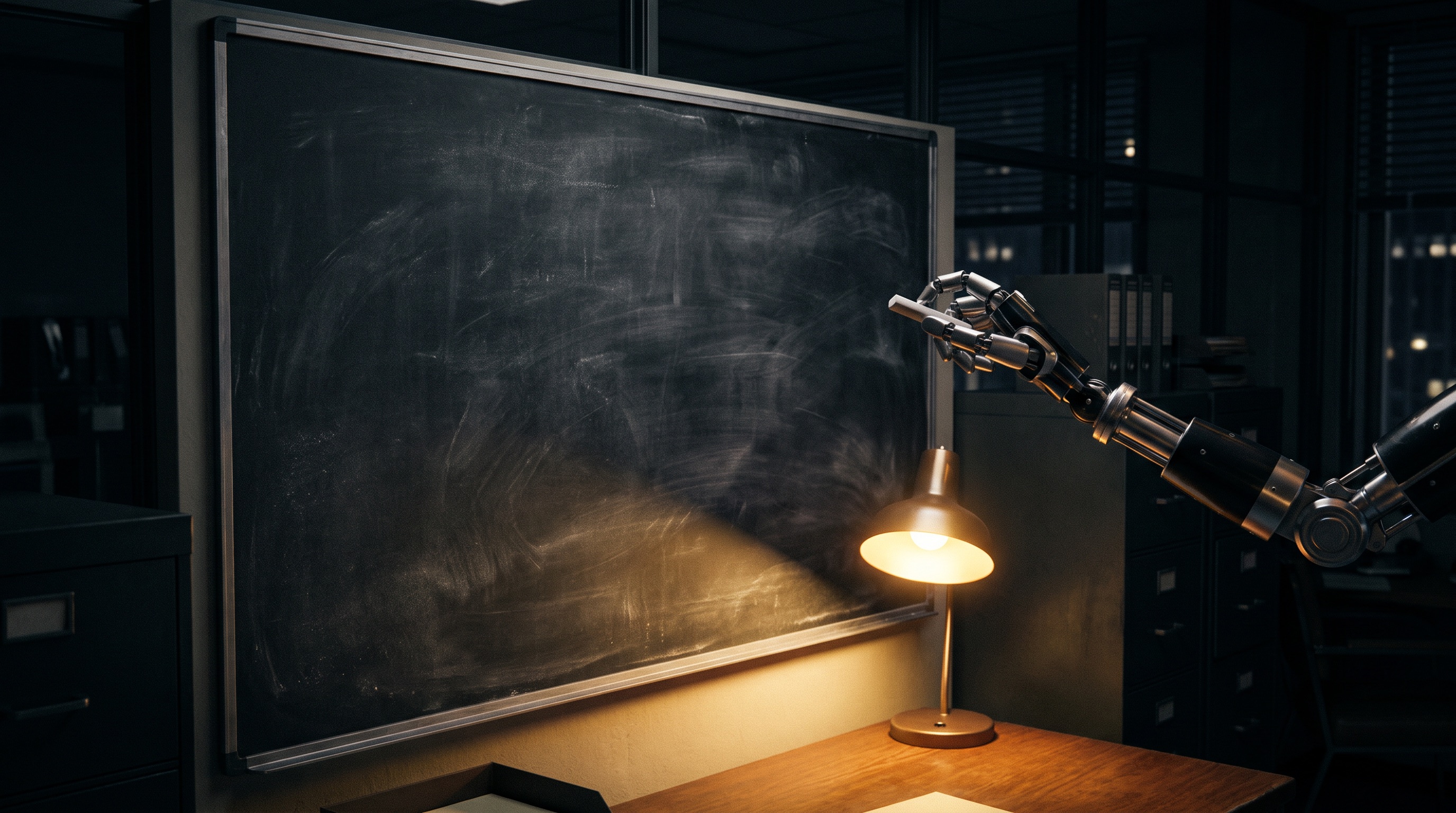
In 2012, a network trained on two gaming cards nearly halved the error rate at the world's image-recognition contest. The step had become cheap. Anything you can observe, it can learn to understand. In 2022 came the generator. Anything it understands, it can create. Now the actor closes the loop. Anything it can create, it can act on. A robot hand pours coffee. Engineers named that loop a century ago. Feedback. A wrong sentence costs a blush. A wrong motion can cost a hand. We are all back on the pad.
Chaos only bends the era. No one can step a single true path through a month of weather, Lorenz proved, so we step the distribution of futures instead. Chaos changes what we approximate. One thing changes whether we may look.
Where the Era Ends
The whole era rests on one hidden assumption. Looking is free. We observe the world, and the world does not notice.
At the quantum scale that assumption dies. You cannot copy an unknown quantum state. Measure it, and you change the answer. Looking stops being a window and becomes a transaction. There is no dataset at the bottom of physics. Machines that work behind that veil are just now being built. One with quantum memory already learns some things exponentially faster than any classical observer. That is not this era. That is the next one.
The era that opened 250 years ago with rules nobody could solve is closing at its pinnacle. Before it ends, we will understand, create, and act on more of the observable world than centuries of instruments revealed. That is not a trophy. That is the new baseline. The next era will stand on it the way Katherine stood on Euler.
What She Still Had
Return to the question. Glenn's machine was hundreds of thousands of times faster than Katherine Johnson. He asked for her anyway. For a day and a half she reran the entire flight at her desk calculator, until her numbers matched the machine's. "If she says they're good," he told the engineers, "then I'm ready to go."
Look at the era's promise. Anything, not everything. A machine this capable cannot choose what is worth doing. What should it do for us? Will the answer leave our lives better? The machine never asks. Choosing is judgment, and judgment is taste.
A choice needs someone to answer for it. The machine risks nothing. It has no family, no career, no reputation. A person who signs puts all of those on the table. Trust goes to someone who can be wrong at a cost. Katherine's name on that report became the one thing no machine could produce.
Judgment. Accountability. Trust. That is what she still had. That is what we still have.
Your Katherine Johnson Moment
Every idea you shelved because it needed fifty people and ten years is back within reach. I watched one person, in two days, draft regulatory filings for sixty-three countries in seven languages. What was missing was not code. Code is cheap now. It was a signature.
So I leave you with the question. When anything is possible, what will you say is worth doing? When the answer must be right, what will they turn to you for? What is your Katherine Johnson moment?
Katherine worked twenty-four more years, helped put men on the Moon, and lived to one hundred and one. The man who would not launch without her went back to space at seventy-seven. The machine took her title. It never touched her.
John Glenn knew his answer. He made it an order.
Be the one they won't launch without.